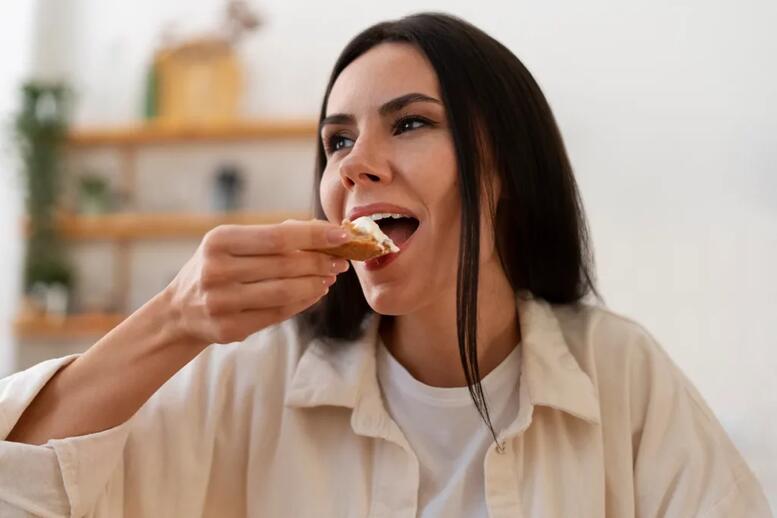
Most people think about diet in terms of quantity. How much sugar was in the biscuit? Was the snack healthy enough to justify another one later?
Teeth operate on a slightly different timetable.
From an oral-health point of view, the number of times your mouth is exposed to sugar and acid can matter as much as the amount consumed. A single afternoon treat and a steady stream of small snacks are not necessarily the same event for your teeth.
That is because the mouth is constantly trying to restore balance. Give it time between eating occasions and saliva can do some of its protective work. Keep reaching for something every 20 minutes and that recovery period becomes much harder to find.
Your mouth works in cycles, not meal plans
When plaque bacteria on the teeth use sugars from food and drinks, they produce acids. Those acids can remove minerals from the tooth surface, a process known as demineralisation.
The mouth is not defenceless. Saliva helps neutralise acids, while saliva and fluoride can support the return of minerals to enamel. Problems are more likely when harmful factors repeatedly outweigh the protective ones.
That is why frequency deserves more attention than it usually gets.
A person who has something sweet with lunch and then leaves their mouth alone for a while creates a different pattern from someone who grazes on sweetened yoghurt, dried fruit, muesli bars or milky coffee throughout the afternoon. Each new exposure can restart the process.
The modern workday can become one long eating occasion
Think about an ordinary office or work-from-home day.
Breakfast ends at 8 am. Coffee appears at 9.30. There is half a protein bar at 10.15, the other half at 11, lunch at 12.30, another coffee at 2, crackers at 3, then a drink in the car on the way home.
None of those moments looks excessive on its own. Collectively, though, the mouth may have spent much of the day responding to food or drink.
This is where well-intentioned habits can become misleading. People often improve the nutritional quality of what they eat but never change how often they eat it. A snack may be high in fibre or marketed as natural and still contain sugars or carbohydrates that matter to oral health.
The point is simply to recognise that “little and often” can have a different dental effect from eating at more defined times.
The two-hour drink is not really one drink
Sipping deserves its own attention because drinks are easy to stretch out.
A takeaway coffee can sit beside a laptop for an hour. A sports drink may last an entire training session. A sweetened tea can be reheated twice. Even a small drink can become dozens of separate contacts with the teeth when it is consumed slowly.
For sugary drinks, repeated exposure gives plaque bacteria repeated access to sugar. Acidic drinks can add another issue by exposing the tooth surface directly to acid. The Australian Dental Association considers the form, frequency and timing of sugar intake relevant to tooth decay, not just the total amount consumed.
There is a difference between having a drink and carrying it around as a permanent companion.
Dry mouth can make the pattern less forgiving
Saliva is one of the reasons the mouth can recover between eating and drinking. When saliva flow is reduced, that protective buffer is weaker.
Dry mouth can occur for several reasons, including some medicines, dehydration and certain health conditions. Exercise can also leave the mouth feeling dry.
In those situations, frequent snacking or sipping on anything other than plain water can become more significant. Someone may try to relieve dryness with lollies, juice or flavoured drinks while unintentionally increasing the number of exposures their teeth receive.
Persistent dry mouth is worth discussing with an appropriate health professional rather than simply masking the sensation. For people in Bruce who want dental advice tailored to what is happening in their own mouth, Best Dentist in Bruce, Canberra is one local option for arranging an assessment instead of relying on general food rules alone.
A better routine is often about creating gaps
Dental advice becomes unhelpful when it sounds like a ban on normal life. Most people are not going to stop having coffee, dessert, afternoon snacks or drinks with friends.
A more practical idea is to create clearer eating and drinking occasions.
If you want something sweet, having it with a meal may be preferable to returning to it repeatedly across the day. If you keep a drink on your desk, make plain water the default between meals. If you are genuinely hungry, eat a satisfying snack rather than nibbling at the same packet for 90 minutes.
That shift is less about restriction and more about rhythm.
It can also make routines easier to notice. Someone who says they “hardly eat sugar” may realise that they add a little to four coffees. Small exposures disappear from memory because they never feel like proper eating occasions.
Give your teeth some quiet time
Good oral health is not created by perfect eating. It is shaped by repeated patterns, including brushing with fluoride toothpaste, cleaning between the teeth, sensible food choices and regular dental care.
The less obvious part is what happens in the spaces between meals.
Those gaps give saliva a chance to dilute and neutralise acids and help the mouth move back towards balance. When every pause is filled with another sip or bite, the mouth is asked to start over again.
So the next time you think about whether a snack is “good” or “bad”, consider a different question: when did your teeth last get a break?
Sometimes the most useful change is not choosing a completely different food. It is simply finishing what you chose, putting it away and giving your mouth some downtime.
Read More: logic gates symbols